Stepping onto a boat with people you met online takes a certain amount of trust. Everyone on board shares a small deck for hours, often far from the dock. Wave Boaters builds its community around that fact. Before anyone matches, hosts, or books, the company puts several checks in place, and each one answers a different question about who is coming aboard.
The first layer: every application gets a look
Nobody joins Wave Boaters by simply downloading the app. The company's four steps start with an application, where a person tells the team who they are and how they like to spend time on the water. The site says the application only takes a few minutes.
The second step is approval. According to the site, the Wave Boaters team reviews every application to keep the community friendly and safe. The FAQ addresses the obvious objection head on. It says the application is not about being exclusive, and that the review exists so the community stays friendly, respectful, and safe for everyone on board.
That framing matters for a community where, by the company's own account, most members are guests rather than owners. Earlier coverage here explained how the app replaces the yacht-club introduction. The review step is the part that keeps that open door from becoming a free-for-all.
The second layer: people who already know you
The same step includes a social check. The site says members you know can vouch for you. A vouch from an existing member gives the team, and the community, one more signal that a new applicant is who they say they are.
It also mirrors how boat days have long come together. A friend of a friend gets the invite because someone on board can speak for them. Wave Boaters turns that habit into part of the application.
The third layer: matching works both ways
Approval does not open every boat to every member. The Wave Match works like this: a member swipes on people they would like to meet, and only if the other person waves back can the two message each other and make plans. Owners, guests, crew, creatives, and partners all appear in the same swipe deck, so the mutual wave applies across roles.
Once a day out comes together, the site says everyone going is added to a group chat so plans are easy. Guests can see who else is coming before the boat leaves the dock.
The fourth layer: rules for hosts and charters
Owners face an extra step before they host. The company's safety section says owners upload their registration and insurance to earn a Verified badge before hosting. Paid charters need a USCG-licensed captain, either the owner's own or a verified captain from Wave. A previous story covered why that captain rule matters around Miami, where the Coast Guard has stopped a series of illegal charters this year.
Crew go through their own check. The site says captains, deckhands, chefs, and stews can show their experience and get verified before finding work with owners nearby.
The fifth layer: conduct and reporting
The last layer covers behavior after someone is in. The safety section says every member agrees to the Wave Boaters Code of Conduct, and anyone can report a problem straight from the app. The App Store listing also rates the app 18+.
The review exists so the community stays friendly, respectful, and safe for everyone on board.
What guests can still do on their own
An app can check people. It cannot check the weather or the life jackets. The Coast Guard's own boating advice fills that gap, and it applies on any boat day, through any app or none.
The Coast Guard says a float plan, meaning a note on where the boat is going and when it will be back, should be left with a reliable person ashore. The operator usually prepares it, but the Coast Guard encourages everyone on board to ask whether the operator has left one. The free float plan form is available from Float Plan Central, run with the Coast Guard Auxiliary.
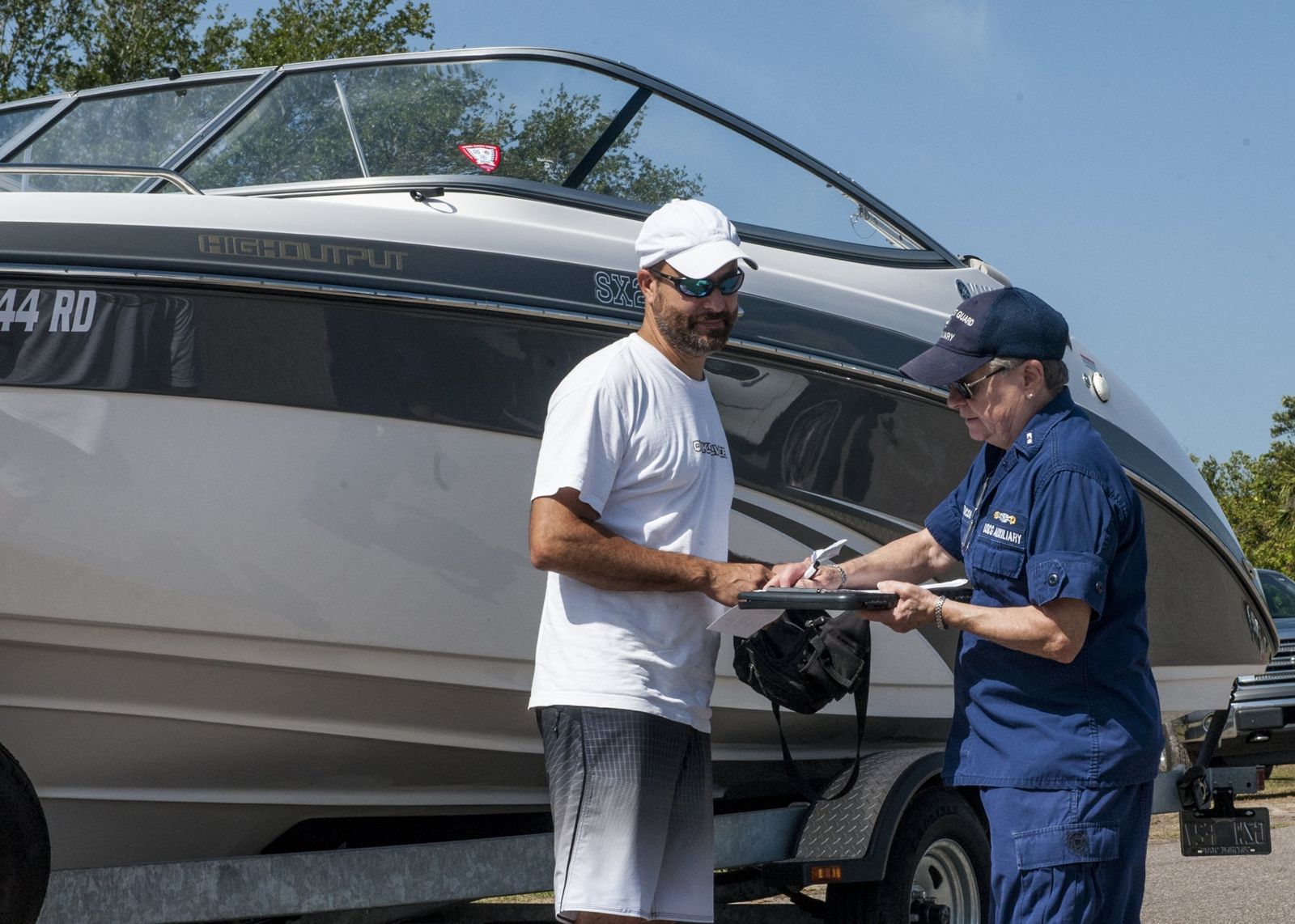
Owners have a matching tool. The Coast Guard Auxiliary offers a free Vessel Safety Check, which it says usually takes 15 to 30 minutes. Boats that pass receive a decal for that year, and boats that do not pass get a written report instead of a citation.
This story draws on Wave Boaters' published description of its own application, matching, and safety rules, and on public Coast Guard and Coast Guard Auxiliary pages. It does not describe any specific member, event, or application, and it does not add figures the company has not published.
Taken together, the layers answer different questions. The review asks whether a person belongs in the community. A vouch asks whether someone already knows them. The mutual wave asks whether both sides want to meet. The Verified badge and captain rule ask whether the boat and the person at the helm meet the bar. Wave Boaters is available now on the Apple App Store, with Google Play listed as coming soon.